
NEWYou can now listen to Fox News articles!
An Underground Railroad passageway in New York City was recently identified — and is now under potential threat from proposed commercial development, according to advocates.
The passage, found in the Merchant’s House Museum in the NoHo neighborhood of Manhattan, is believed to have been part of a secret network of routes that helped enslaved Black Americans escape to freedom.
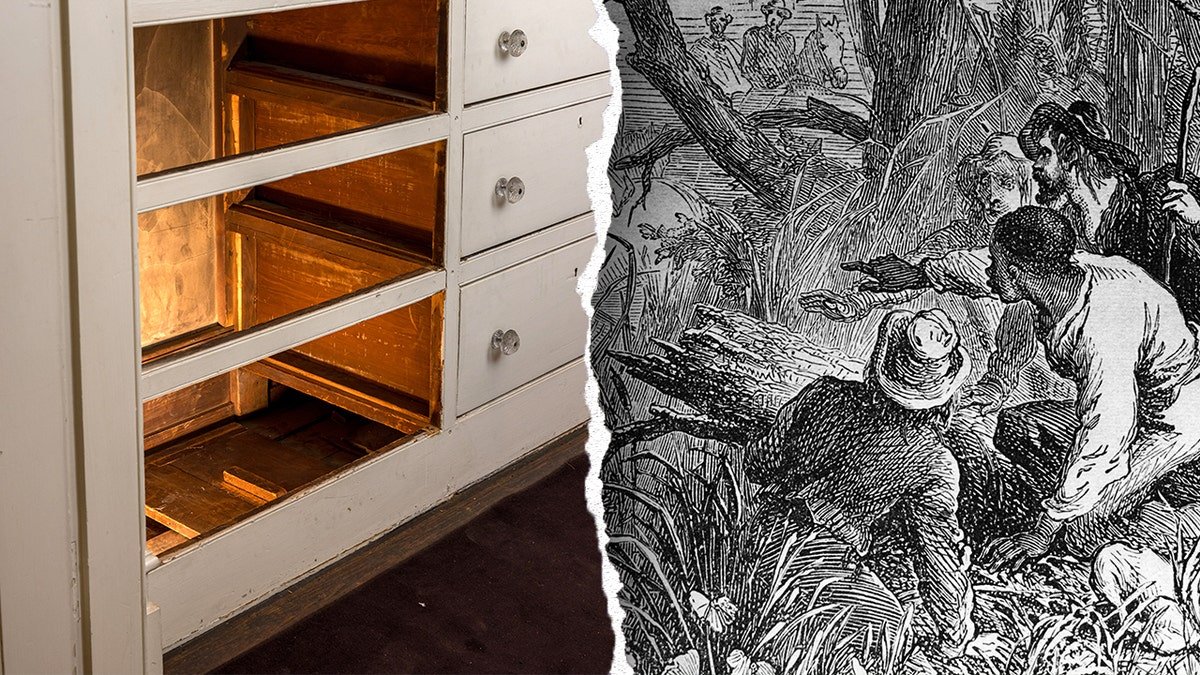
The structure is described as “about 2 feet square and secreted beneath a built-in chest of drawers on the second floor, [and] descends 15 feet to the ground floor,” according to a statement from the Merchant’s House Museum.
MASSIVE INDUSTRIAL SITE UNCOVERED IN UNLIKELY LOCATION AS ARCHAEOLOGISTS CITE ‘ENORMOUS’ POTENTIAL
Though the home dates to 1832, it’s unclear when the passageway was built.
The house, however, was built by an abolitionist, Joseph Brewster — and the hidden passage “serves no known domestic purpose,” according to the museum.
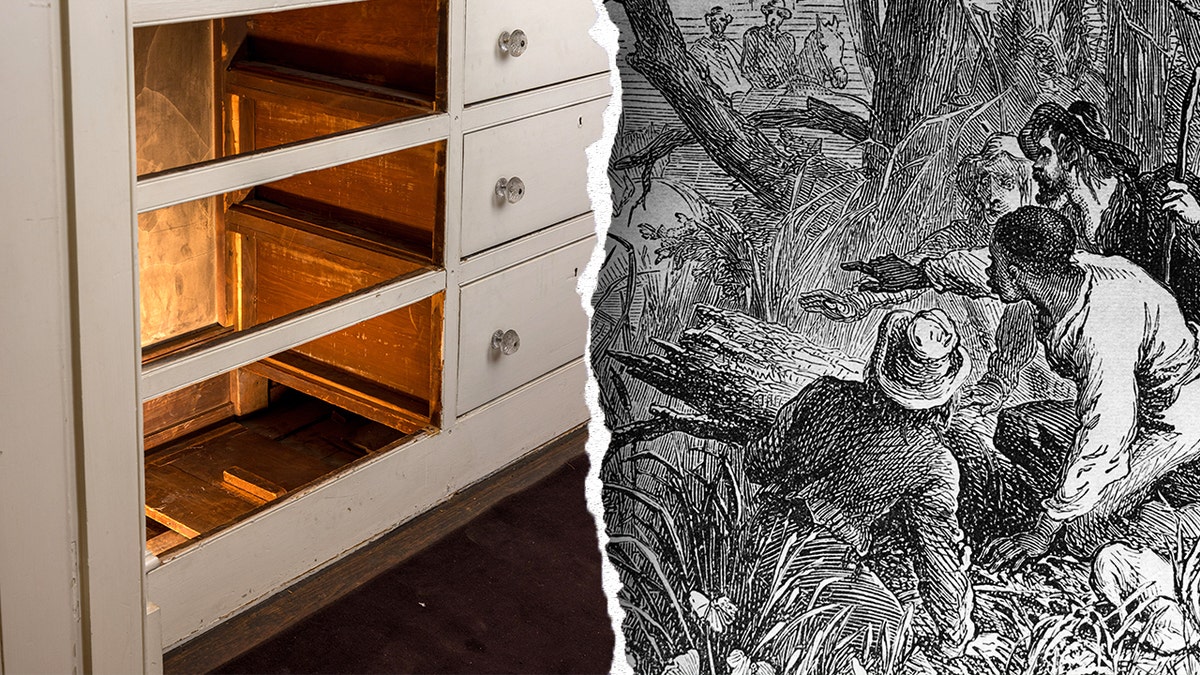
A newly identified passageway at a historic Manhattan home is believed to have played a role in helping enslaved Black Americans escape to freedom through secret routes. (Max Touhey/Merchant’s House Museum via AP; Three Lions/Hulton Archive/Getty Images)
The passageway was first found in the 1930s. Historians did not know until recently that Brewster was an abolitionist.
Museum officials said the analysis of the site took two years of “extensive research” — and now the site is at risk. The building is on the National Register of Historic Places.
TEST YOURSELF WITH OUR LATEST LIFESTYLE QUIZ
The concern is connected to the proposed development of a nine-story mixed-use building that could possibly damage the walls and foundation of the Merchant’s House Museum, according to The Associated Press.
Emily Hill-Wright, the museum’s director of operations, recently told AP that engineers have raised concerns about potential structural damage.
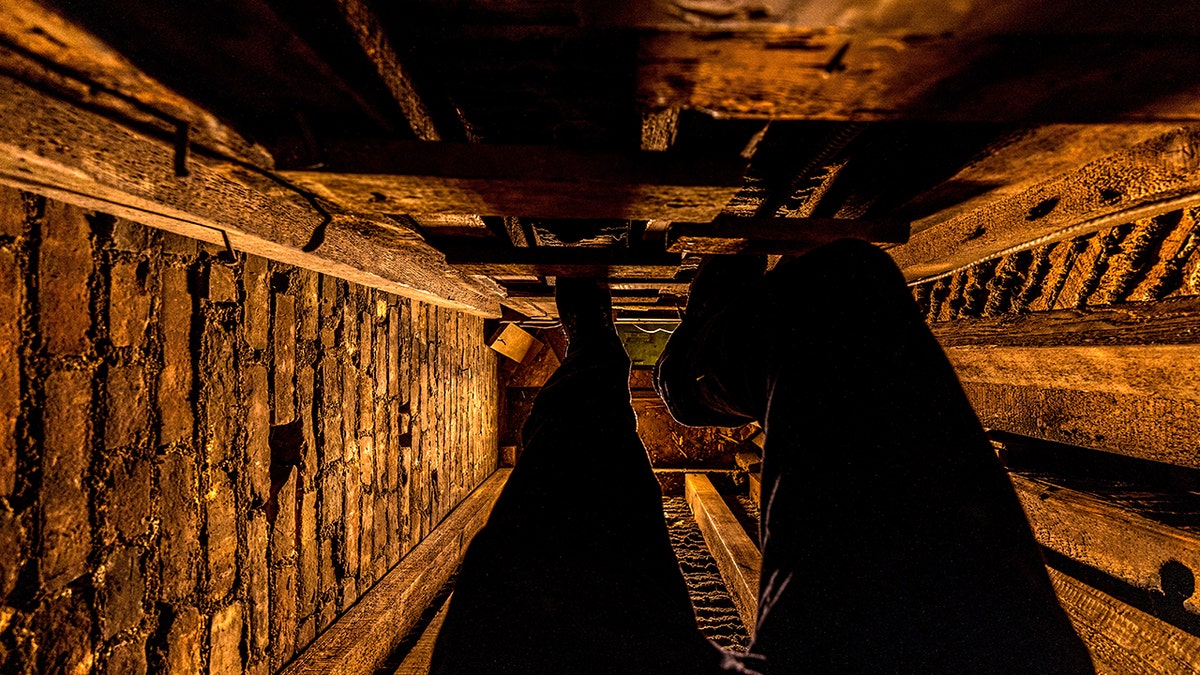
A concealed passage beneath a second-floor chest of drawers descends roughly 15 feet to the ground level. (Max Touhey/Merchant’s House Museum via AP)
“What our engineers are saying is that there really is no way that a building of that size is built immediately next door to the museum without causing significant structural damage to our historic building,” she said.
Museum officials also said the discovery has brought in more visitors in recent months.
CLICK HERE TO SIGN UP FOR OUR LIFESTYLE NEWSLETTER
New York City’s Landmarks Preservation Commission is set to make a decision on the development, but members of the community are raising concerns.
In a statement last week, Rev. Al Sharpton warned the site is at risk of “irreversible damage.”
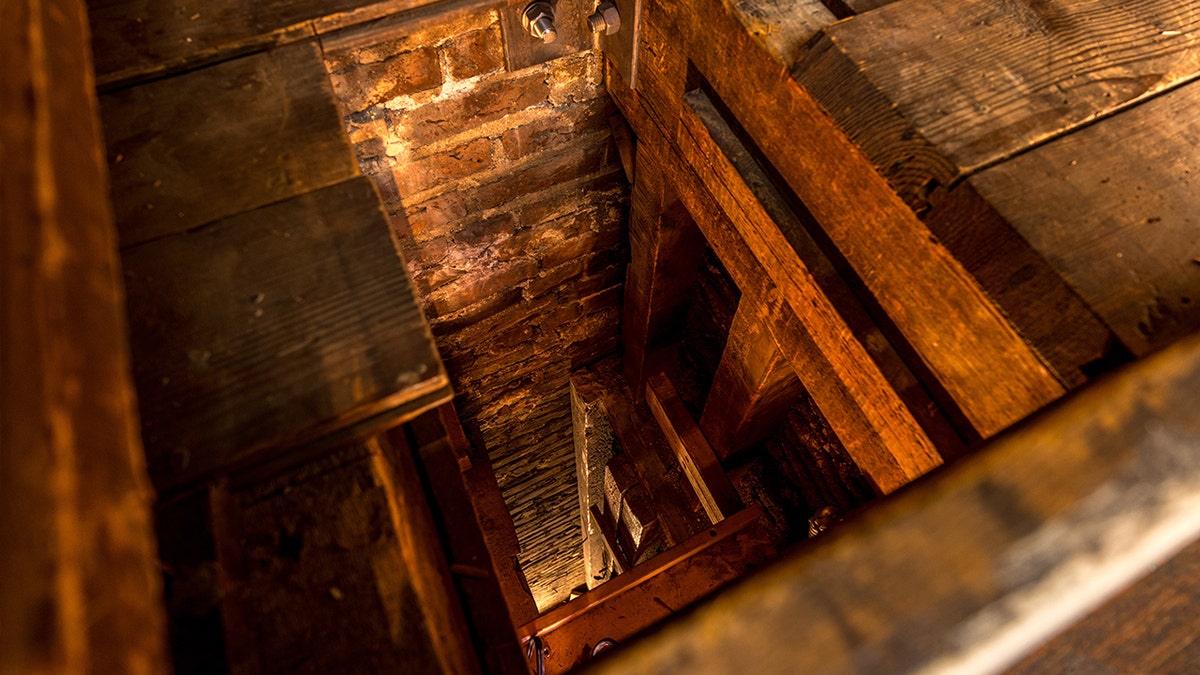
Researchers say the hidden space serves no known domestic purpose inside the historic New York City home. (Max Touhey/Merchant’s House Museum via AP)
“When engineers tell me that an African American heritage site is in danger of structural compromise or any other sort of irreversible damage, I listen,” Sharpton said in a statement.
The private developer, Kalodop II Park Corp., wants to replace the one-story garage it owns at 27 East 4th St. with a nine-story office building that includes ground-floor space likely to be used for a restaurant or art gallery, as The New York Post reported of the details.
“Bounty hunters were all over the place in New York City.”
The developer had two earlier applications for construction on the lot; the most recent was approved in 2023, the Post also said. But Kalodop never began the construction — and in December submitted new plans for a building that would have two more stories.
CLICK HERE FOR MORE LIFESTYLE STORIES
Helping enslaved people would have come at a great cost to Brewster, Harlem Historical Society director Jacob Morris told The Associated Press.
“Bounty hunters were all over the place in New York City. They made their living on catching freedom-seeking Blacks,” he said.
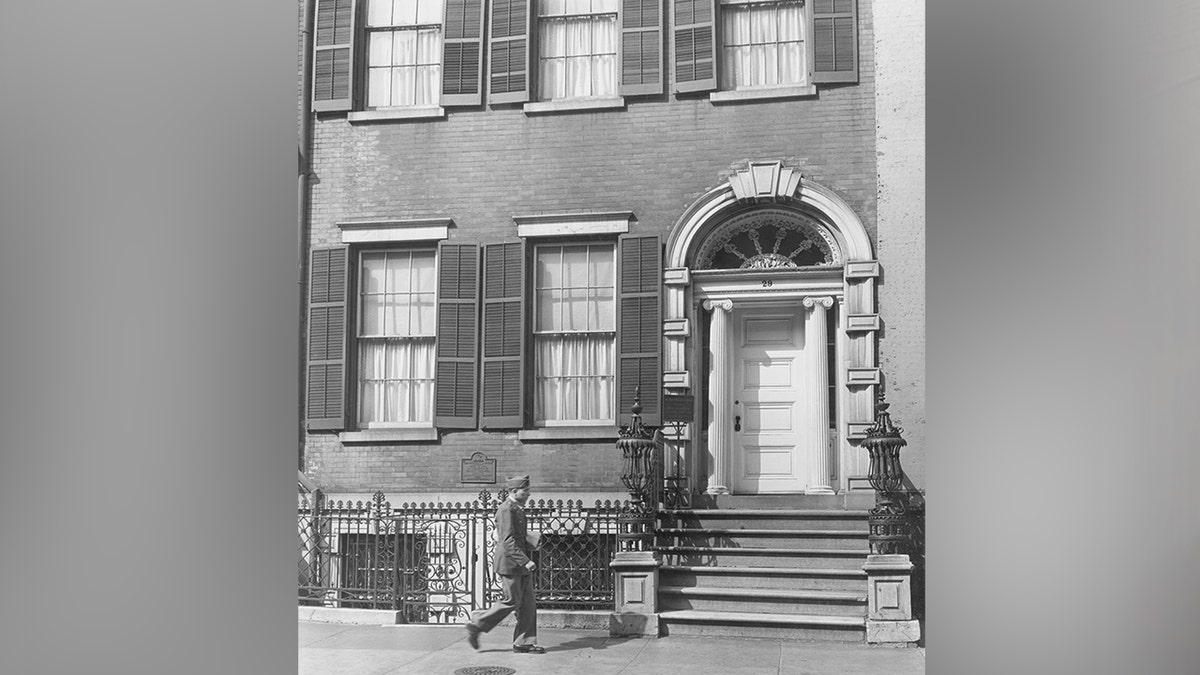
The Merchant’s House Museum was originally built in 1832 by abolitionist Joseph Brewster, historians say. (Lawrence Thornton/Archive Photos/Getty Images)
Morris added, “If you got caught helping Blacks escape from slavery, a mob could come and burn down your house and beat you up. And maybe even tar and feather you, or worse.”
The passageway discovery is one of many recent archaeological finds involving African American history.
Last June, a South Carolina tourist found “historically significant” remains on Edisto Island, once home to a community of African American sharecroppers.
CLICK HERE TO GET THE FOX NEWS APP
Also, last summer, archaeologists in Williamsburg, Virginia, dug up artifacts from the oldest surviving schoolhouse for Black children.
The Associated Press contributed reporting.