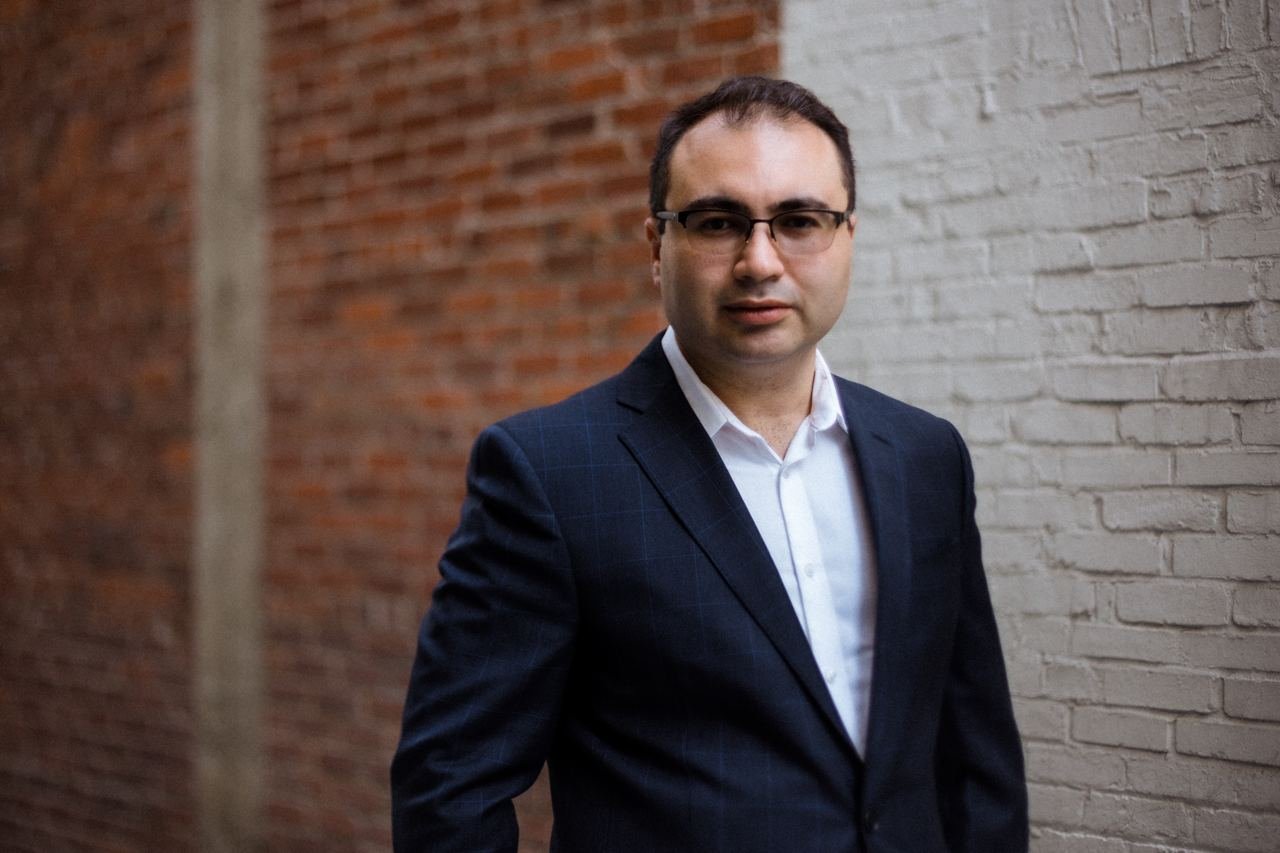

An Exclusive Interview with Ulvi Rashid, Founder and Investment Director, Traction Fund
Interview conducted by Sayali B.
A quantitative examination of founder-led performance across public technology companies, with implications for private market investing
Sayali B (New York Insider): Hi Ulvi, great to have you today and talk about founder led mode vs manager led mode. But first tell us about yourself.
Ulvi Rashid: Hi Sayali, thank you for this opportunity. I am a venture capitalist investing in emerging enterprise and deep technologies in the US and Central Eurasia. In the past 8 years I have extensively invested in late-stage companies deploying more than 200M in late-stage companies and since the AI boom shifted the focus to growth stage companies where my expertise and executive network gives me the edge and lets me tilt the odds.
New York Insider: You like arguing that “founder-mode” companies consistently outperform the market. What led you to this conclusion?
Ulvi Rashid: Across both private and public markets, I’ve repeatedly observed that when the founder stays actively involved—what Airbnb CEO Brian Chesky calls “founder mode”—companies maintain velocity, clarity, and conviction in decision-making. Paul Graham described this as an “operating stance,” not just a title. I wanted to test that hypothesis quantitatively using public data rather than anecdotes.
The question isn’t whether founder-led companies can outperform—it’s whether they do so consistently enough to make it a reliable investment signal. My goal was to move beyond Silicon Valley mythology and examine the actual numbers.
New York Insider: How did you structure your analysis?
Ulvi Rashid: I analyzed market performance data for 11 publicly traded technology companies, comparing them against the S&P 500 benchmark over a five-year period from September 30, 2020 to October 30, 2025. The cohort includes NVIDIA, Alphabet, Meta, Shopify, Cloudflare, CrowdStrike, Zscaler, Spotify, AppLovin, Rubrik, and Nebius.
Each company was selected based on three criteria:
1. Founder involvement: The founder remains in an executive or board role with meaningful decision-making authority
2. Product momentum: The company operates multiple revenue streams and demonstrated growth in the trailing 12 months
3. Capital strength: Strong cash positions relative to their market capitalization, with tier-one companies holding ≥$30 billion in liquid assets
The S&P 500 serves as our benchmark because it represents the broad market performance that any investor can access through passive index funds.
New York Insider: What did the five-year analysis reveal?
Ulvi Rashid: The results were striking. Over the five-year period:
• S&P 500 gained +105% (from 3,363 to 6,891)
• Founder-led portfolio averaged +213% growth
• 75% of stocks (6 out of 8 with full 5-year data) outperformed the S&P 500
• Median return was +80%, still significantly above the index
The top performers showed exceptional returns:
• NVIDIA: +838% (56.2% compound annual growth rate)
• Alphabet: +100% (matching the S&P 500 percentage but at massive scale)
• Meta: +79% (12.4% CAGR)
• Cloudflare: +100% (14.9% CAGR)
• CrowdStrike: +80% (12.5% CAGR)
Companies that went public during this period showed explosive growth, as well. AppLovin, which IPO’d in April 2021, delivered +833% returns (57.1% CAGR) over 4.6 years. Rubrik, public since April 2024, gained +204% in just six months.
New York Insider: Were there any underperformers that challenge your thesis?
Ulvi Rashid: Yes, and they’re instructive. Shopify gained only +17% over five years, significantly underperforming the S&P 500. This matters because Shopify is founder-led—Tobias Lütke remains CEO—yet it lagged dramatically.
The key difference? Market dynamics and product-market fit evolution. Shopify benefited enormously from COVID-era e-commerce acceleration, but faced normalization as physical retail recovered. The company also faced increased competition and margin pressure. This suggests that founder-led status alone isn’t sufficient—the business model must remain relevant and defensible.
Similarly, Nebius presents a unique case. The company resumed trading in October 2024 after being restructured from Yandex, and has since gained over 700%. While founder-adjacent (rebuilt by former Yandex leadership), its short trading history makes it statistically inconclusive, though directionally supportive of the thesis.
New York Insider: You mentioned capital strength as a critical factor. Why does that matter for founder-led companies specifically?
Ulvi Rashid: Capital strength amplifies founder advantages. Here’s why:
Founders tend to think in decades, not quarters. They’re willing to make long-term bets that might depress near-term earnings if they believe it creates durable competitive advantage. But you can only do that if you have the balance sheet to withstand short-term volatility without existential pressure.
Look at the data patterns:
Tier 1 – Very Large Cash Reserves (≥$30B):
• NVIDIA: ~$35B in cash, +838% return
• Alphabet: ~$110B in cash, +100% return
• Meta: ~$65B in cash, +79% return
Tier 2 – Strong But Smaller Reserves:
• Cloudflare: ~$2B in cash, +100% return
• CrowdStrike: ~$3.5B in cash, +80% return
• AppLovin: ~$1.3B in cash, +833% return (post-IPO)
The companies with the largest cash reserves can fund multi-year R&D cycles (AI infrastructure, metaverse experiments, new product categories) without asking permission from public markets or diluting shareholders. They have optionality—the most valuable resource in innovation.
Contrast this with founder-led companies that are under-capitalized. They face constant trade-offs between growth investment and runway preservation, which constrains strategic boldness even if the founder has vision.
New York Insider: How do you explain NVIDIA’s extraordinary performance?
Ulvi Rashid: NVIDIA is the perfect case study in founder-led leverage. Jensen Huang founded the company in 1993 and has been CEO continuously for 32 years. He made a series of decade-long bets that seemed irrational in the short term:
1. CUDA platform (2006): Invested heavily in general-purpose GPU computing when the market was tiny
2. AI pivot (2012+): Recognized deep learning potential years before it was obvious
3. Data center transformation (2016+): Repositioned from gaming-first to compute-first
Each of these required multi-billion-dollar investments with uncertain payoffs. A professional CEO answering to activist investors might have been forced to optimize for near-term GPU gaming margins. Huang’s founder authority—combined with NVIDIA’s strong balance sheet—let him make those bets.
The result: NVIDIA grew from ~$320B in market cap (September 2020) to ~$3 trillion (October 2025), a +838% gain that outperformed the S&P 500 by 733 percentage points.
New York Insider: You’ve also tested this thesis in real-time with a live portfolio. What did that experiment show?
Ulvi Rashid: Yes. I wanted to move beyond historical backtesting and create a live, public portfolio that anyone could track. In September 2025, I launched the “Founder-led High Tech Rocketships” portfolio ($FOUNDERLED) on the investment platform Dub.
The portfolio holds the same 11 companies I analyzed: NVIDIA, Alphabet, Meta, Shopify, Cloudflare, CrowdStrike, Zscaler, Spotify, AppLovin, Rubrik, and Nebius. It’s equally weighted and rebalanced periodically.
As of October 30, 2025 (approximately two months since inception):
• $FOUNDERLED portfolio: +13.14%
• Market benchmark: +6.62%
• Outperformance: +6.52 percentage points (nearly double the market return)
Within the portfolio, individual holdings showed strong performance:
• AppLovin: +13.78%
• NVIDIA: +12.45%
• Cloudflare: +10.12%
• Spotify: +10.03%
• Shopify: +9.99%
Two months is statistically inconclusive, but the early results align with the five-year historical pattern. More importantly, this creates a transparent, replicable experiment that others can verify and critique.
New York Insider: What about Apple and Tesla—how do they fit into your framework?
Ulvi Rashid: Apple is the most interesting counter-example. Tim Cook is not a founder, yet Apple returned +86% over the five-year period—solid, but trailing the founder-led giants. This suggests that exceptional professional management can deliver strong results, especially when inheriting a founder-built culture and ecosystem.
However, Apple’s performance still lagged NVIDIA (+838%), Meta (+79%), and even matched Alphabet (+100%) despite being a $3 trillion company with mature products. The question is: would Steve Jobs-led Apple have delivered even higher returns? We’ll never know, but the data suggests founder involvement provides an additional edge.
Tesla demonstrates the opposite: founder-led with a strong cash position. Despite significant volatility, Tesla delivered +153% returns over five years. Elon Musk’s willingness to bet on vertical integration (batteries, charging, manufacturing) and adjacent businesses (solar, robotics, AI) mirrors the founder playbook we see in other top performers.
New York Insider: Does this thesis apply to private markets, where most of your investing happens?
Ulvi Rashid: Yes, with important caveats. Private market data is less visible and harder to verify, but the underlying dynamics are similar—often stronger.
At Traction Fund, we focus on founder-led startups that demonstrate three traits:
1. Founder obsession: The founder thinks about the product constantly, makes rapid decisions, and maintains clear strategic vision
2. Multiple revenue engines: Early evidence of platform potential, not just point solution
3. Capital efficiency: Generating revenue or clear path to monetization before needing massive dilution
In private markets, founder involvement is even more critical because governance is simpler—there’s no public scrutiny, no quarterly earnings calls, no activist investors. A founder can move faster and take bigger risks. But they also have less capital cushion, so mistakes are more expensive.
I’ve invested in several founder-led private companies—SpaceX, Coursera, Kraken, Hercules AI, Figure Technologies, Intento — precisely because they combine visionary founders with clear product momentum. The same patterns that predict public market outperformance also correlate with successful venture outcomes: faster product iteration, stronger talent retention, and better long-term value creation.
New York Insider: What are the implications for public market investors?
Ulvi Rashid: The data suggests a clear strategy: overweight founder-led technology companies with strong balance sheets.
This isn’t about blindly buying every founder-run company. It’s about filtering for:
• Active founder involvement (not just board seat)
• Multi-product ecosystems (platform, not point solution)
• Strong cash reserves (ability to fund long-term bets)
• Demonstrated growth momentum (not just past success)
If you had invested equally in the eight companies with five-year data in September 2020, you would have averaged +213% returns versus +105% for the S&P 500—more than double the index return.
The challenge is that these companies are typically large-cap ($50B+), so massive outperformance becomes harder. But the data shows that even at scale, founder-led companies maintain an edge.
New York Insider: Are there risks to this approach?
Ulvi Rashid: Absolutely. Several risks deserve consideration:
1. Concentration risk: Founder-led portfolios tend to be tech-heavy, creating sector concentration
2. Key person risk: If the founder leaves or becomes incapacitated, performance may deteriorate rapidly
3. Governance concerns: Founders sometimes have dual-class shares or board control, limiting shareholder rights
4. Succession challenges: Eventually every founder exits; the transition is often rocky
The Shopify example shows that founder-led status doesn’t guarantee success if the underlying business faces structural challenges. And concentrated portfolios amplify volatility—while the average return is higher, the journey is bumpier.
Investors should view this as a tilt, not a monolithic strategy. Maintain diversification, but overweight founder-led companies when they meet the three criteria: active involvement, strong cash, and product momentum.
New York Insider: How can readers verify your analysis?
Ulvi Rashid:
Complete transparency is essential for credible research. All data sources are public:
• Stock returns: FinanceCharts, Yahoo Finance, and individual company investor relations sites
• Market cap data: SEC filings (10-Q, 10-K reports) and earnings releases
• S&P 500 performance: State Street (SPY), Vanguard (VOO) fact sheets
• Cash balances: Most recent quarterly earnings reports (Q2-Q3 2025)
• Live portfolio: Dub platform ($FOUNDERLED ticker)
Anyone can recompute the medians, adjust the cohorts, or test different time periods. The goal isn’t to claim definitive causality—it’s to present transparent, replicable data that advances the conversation.
New York Insider: What’s your main takeaway for founders and investors?
Ulvi Rashid: “Founder-led” isn’t a personality trait—it’s a governance model. When paired with liquidity strength and diversified product ecosystems, it produces superior risk-adjusted returns across both public and private markets.
For founders: Stay close to the product, maintain board authority, and build capital cushions early. Your long-term vision is your competitive advantage, but only if you have the resources and autonomy to execute it.
For investors: Actively seek founder-led companies that meet the three criteria. Historical data shows they outperform—not occasionally, but consistently. The question isn’t whether to overweight them, but by how much. For VC investors – make sure that you are not investing in company where founder is not present – rarely anyone would care about the startup more than a person who envisioned it in the first place.
The evidence is clear: when founders remain involved, maintain strong balance sheets, and operate multi-product platforms, compounding follows.
REFERENCES
1. Chesky, Brian. “Founder Mode.” Decoder Podcast, 2024.
2. Graham, Paul. “Founder Mode.” Paul Graham Essays, September 2024.
3. FinanceCharts. Historical total return data for NVDA, META, GOOGL, SHOP, NET, CRWD, ZS, SPOT, APP, RBRK, NBIS. Accessed October 2025.
4. U.S. Securities and Exchange Commission. Company filings: NVIDIA Q3 FY26; Meta Q2 2025; Alphabet Q2 2025; Amazon Q2 2025; Tesla Q2 2025.
5. State Street Global Advisors. “SPDR S&P 500 ETF Trust (SPY) Fact Sheet.” September 2025.
6. BlackRock. “iShares Russell 2000 ETF (IWM) Fact Sheet.” September 2025.
7. Invesco. “Invesco QQQ Trust (QQQ) Fact Sheet.” September 2025.
8. Dub Investment Platform. “$FOUNDERLED Portfolio Performance.” October 30, 2025.
Interviewee Disclosure
Ulvi Rashid is Founder and Investment Director of Traction Fund. He acquired directly and indirectly shares of the several companies mentioned in this article, including SpaceX, Coursera, Kraken, and Hercules AI. This article presents empirical research and does not constitute investment advice.