
By Emilia Williams
As enterprise software systems continue to scale in complexity, design challenges around configuration and usability are drawing increased attention across the industry. These challenges, often tied to the difficulty of enabling non-technical users to manage sophisticated systems, have emerged as a recurring constraint in enterprise product adoption.
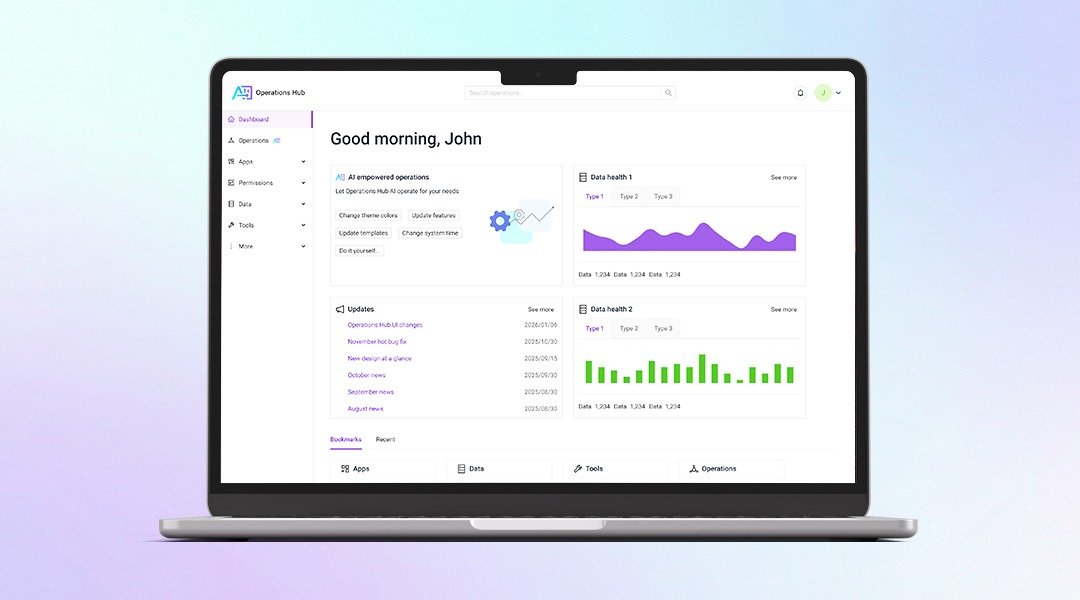
Against this backdrop, product designer Mingjie Chen has received dual Silver Awards at the Indigo Design Award, an international competition recognizing achievement in digital design. His project, Operations Hub — AI-Assisted Operational System, was recognized in both AI for Web Design and UX, Interface & Navigation, spanning technical innovation and user experience design.
The convergence of these two categories reflects a broader shift in how design teams are approaching complexity. Rather than relying solely on interface simplification, emerging approaches are embedding intelligence directly into workflows, allowing systems to guide users through multi-step processes. “The shift is toward systems that guide users through complexity rather than exposing that complexity directly,” Chen said in a written statement accompanying the submission.
Design observers point to configuration-heavy enterprise platforms as a key area where this shift is becoming visible. In many large-scale systems, setup and customization tasks still require specialized expertise, creating operational bottlenecks and limiting the ability of business users to act independently.
Chen’s award-recognized work aligns with this evolving direction. The Operational Hub introduces AI-assisted interaction patterns, including guided workflows, contextual decision support, and real-time dependency handling features designed to address points in the configuration process where users typically encounter friction.
This approach highlights a distinction that is increasingly relevant in enterprise UX: the difference between reducing visible complexity and actively managing it. Systems that incorporate adaptive guidance can support more scalable adoption by reducing the cognitive and technical burden placed on end users.
The Indigo Design Award evaluates submissions through an international jury panel on criteria such as originality, execution, and usability, with entries spanning digital experience, branding, and emerging technologies. Recognition across both AI and UX categories underscores the growing overlap between intelligent systems and interaction design.
Chen’s prior work spans enterprise platforms in fintech and HR technology, domains where configuration demands and usability challenges frequently intersect. His recent projects have focused on integrating system-level design with AI capabilities to improve efficiency and accessibility in complex digital environments.